Showing posts with label rice varieties. Show all posts
Showing posts with label rice varieties. Show all posts
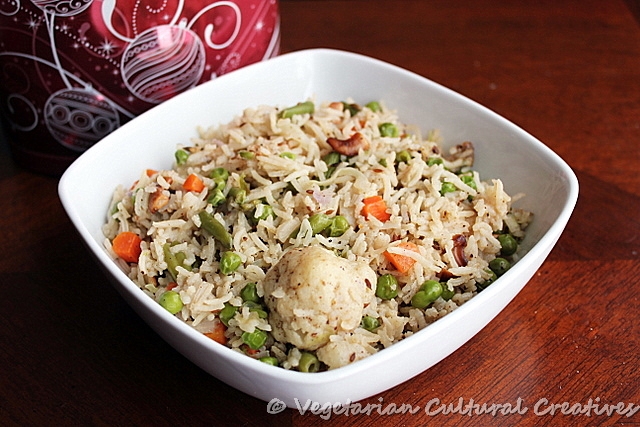
The last few weeks, my primary focus on the blogging front was renovation - replacing some of the old photos with "new and improved" pictures taken with my new Canon Rebel T2i. Well, a new camera is not going to magically improve my photography skills, but it's a start! Coming to the recipe, this is another tiny step towards replacing the empty calories of white rice with the nutritive value of whole grain brown rice. Statistics reveal that people who have 5 or more servings of white rice a week have a 17% increased risk of contracting diabetes while those who take 2 or more servings of brown rice a week have 11% lesser chance of developing the disease. This recipe particularly tastes great with brown rice. I would never ever make this with white rice again!

Ingredients (serves 2):
brown rice - 1/2 cup
split yellow pigeon peas (toor dal) - 1/4 cup
red gram (masoor dal) - 1/4 cup
tamarind paste - 1 tbsp
sambar powder - 1 1/2 tsp
ginger paste - 1/2 tsp (or a 1-inch piece of ginger - peeled and chopped fine)
mixed vegetables - 1 cup, peeled, grated/cubed as required (I use carrot, peas and cabbage)
salt - 3/4 tsp
bisibelabath paste - 1 tsp (optional)
clarified butter (ghee) - 2 tsp
cumin seeds - 1 tsp
fennel seeds - 1 tsp
cashewnuts - 1 tbsp, broken
curry leaves - 1 stalk
water - 4 cups
Method:
Heat a teaspoon of ghee. Add cashewnuts, cumin seeds, fennel seeds and curry leaves. When the cashwes turns golden, add washed brown rice, pigeon peas, red gram, vegetables, ginger, sambar powder and tamarind paste. Fry for a minute and add 4 cups water. Mix in the salt and pressure cook until soft. Stir in the bisibelabath paste and heat for a couple of minutes. Garnish with a teaspoon of ghee and serve hot.
Notes:
The cooking time for brown rice is much more than that of white rice - almost twice the time, depending on your equipment.
Ingredients (serves 2):
brown rice - 1/2 cup
split yellow pigeon peas (toor dal) - 1/4 cup
red gram (masoor dal) - 1/4 cup
tamarind paste - 1 tbsp
sambar powder - 1 1/2 tsp
ginger paste - 1/2 tsp (or a 1-inch piece of ginger - peeled and chopped fine)
mixed vegetables - 1 cup, peeled, grated/cubed as required (I use carrot, peas and cabbage)
salt - 3/4 tsp
bisibelabath paste - 1 tsp (optional)
clarified butter (ghee) - 2 tsp
cumin seeds - 1 tsp
fennel seeds - 1 tsp
cashewnuts - 1 tbsp, broken
curry leaves - 1 stalk
water - 4 cups
Method:
Heat a teaspoon of ghee. Add cashewnuts, cumin seeds, fennel seeds and curry leaves. When the cashwes turns golden, add washed brown rice, pigeon peas, red gram, vegetables, ginger, sambar powder and tamarind paste. Fry for a minute and add 4 cups water. Mix in the salt and pressure cook until soft. Stir in the bisibelabath paste and heat for a couple of minutes. Garnish with a teaspoon of ghee and serve hot.
Notes:
The cooking time for brown rice is much more than that of white rice - almost twice the time, depending on your equipment.


The foodzie tasting box was an exciting entity I won in the Thanksgiving contest on Julia's blog. Thank you Foodzie and Julia! It contained two delectable, multi-layered Alfajores chocolate cookies, crunchy, melt-in-the-mouth caramel popcorns, parmesan flatbread crackers, colorful cranberry beans (with which I made this one-pot meal) and bacon peanut brittles, which I gave a friend, as I'm a vegetarian who doesn't eat bacon.

Ingredients: (serves 2)
cranberry beans - 1/2 cup
basmati rice - 1/2 cup
cabbage - 1/3 cup (grated)
carrot - 1/4 cup (grated)
mint leaves - 25 (fresh)
milk - 1 cup (fat free)
cashewnuts - 1 tbsp (broken)
bay leaf - 1
bay leaf - 1
fennel seeds - 1 tsp
pulao masala - 1/2 tsp
oil - 1 tbsp
green chillies - 3 to 4 chopped fine (adjust according to taste)
salt - 3/4 tsp (adjust according to taste)
Method:
Soak cranberry beans overnight and boil/pressure cook until almost cooked, but not completely cooked. Drain and keep aside.
Heat oil in a saucepan. Add cashewnuts, bay leaf and fennel seeds. When it turns golden brown, add washed basmati rice and fry for a minute. Mix in carrot, cabbage and mint leaves. Fry for another minute and then add milk, pulao masala and salt. Allow to boil for a couple of minutes. Add prepared cranberry beans and microwave with a cup of warm water for 10 minutes.
After a long day at work, I got back home to find the refrigerator almost empty, except for some cabbage. With neither the time nor the energy to cook anything else, this very simple, yet healthy, hearty meal was a godsend.

Ingredients:
cabbage - 1 cup (grated)
cumin seeds - 1 tbsp
oil - 1 tbsp
green chillies - 2 (chopped fine)
turmeric powder - a pinch
cashews - a few
salt - 1 tsp (adjust according to taste)
Method:
Heat oil. Add cumin seeds and cashews. Fry for a minute and add green chillies. Then add washed rice, cabbage, salt and turmeric powder. Stir fry for a couple of minutes. Add 3 cups of water and microwave for 15 minutes or until rice is cooked.
This is a great one-pot meal that can be prepared very quickly without much effort, especially if you have frozen vegetables handy. Works great for the lunch box, even if kids do not have the option of re-heating their lunch before eating. Makes a lovely party pick too.
Ingredients:
basmati rice - 1 cup
fat free milk - 1 cup
diced carrot - 1/3 cup
cut green beans - 1/4 cup
peas - 1/4 cup
grated cabbage - 1/4 cup
cauliflower - a few florets
mint leaves - a handful (cleaned)
green chillies - 3 to 4
salt - 1 tsp (according to taste)
fennel seeds - 1 tsp
oil - 1 tbsp
pulao masala - 1 tsp
water - 2 cups
Method:
Wash rice. Heat oil in a sauce pan. Add fennel seeds and green chillies. Add vegetables and washed rice. Fry for a minute. Add milk, pulao masala, mint and salt and cook for couple of minutes. Add water and microwave for 15 minutes. Allow to cool for 5 minutes. Serve with raita.
Notes:
1. The mix of vegetables used can be varied according to preference.
2. Frozen vegetables can be used.
"Pongal" is the harvest festival of south India, when this sweet dish is prepared. The traditional approach is to slow-cook sweet pongal in a pot until it boils over, when the family exclaims "Pongalo pongal". I usually prepare this only once a year, on Pongal day :) Personally, I prefer the taste of its cousin Akkaravadisal, which I choose to make more often, but each is unique in its own way.

Ingredients: (serves 4)
rice - 3/4 cup
mung beans - 3/4 cup
fat free milk - 6 cups
jaggery/sugar - 1 1/2 cups
clarified butter (ghee) - 6 tbsp
sliced almonds / broken cashews - 2 tbsp
raisins - 2 tbsp
Fry nuts and raisins in a little ghee and keep aside. Fry rice and mung bean in a little ghee and pressure cook with milk and jaggery until soft (even mushy is fine). Once cooked, add remaining ghee, nuts and raisins.
Notes:
If you can't use fat free milk, dilute the milk with some water.
Ingredients: (serves 4)
mung beans - 3/4 cup
fat free milk - 6 cups
jaggery/sugar - 1 1/2 cups
clarified butter (ghee) - 6 tbsp
sliced almonds / broken cashews - 2 tbsp
raisins - 2 tbsp
Fry nuts and raisins in a little ghee and keep aside. Fry rice and mung bean in a little ghee and pressure cook with milk and jaggery until soft (even mushy is fine). Once cooked, add remaining ghee, nuts and raisins.
Notes:
If you can't use fat free milk, dilute the milk with some water.


 Posts
Posts


